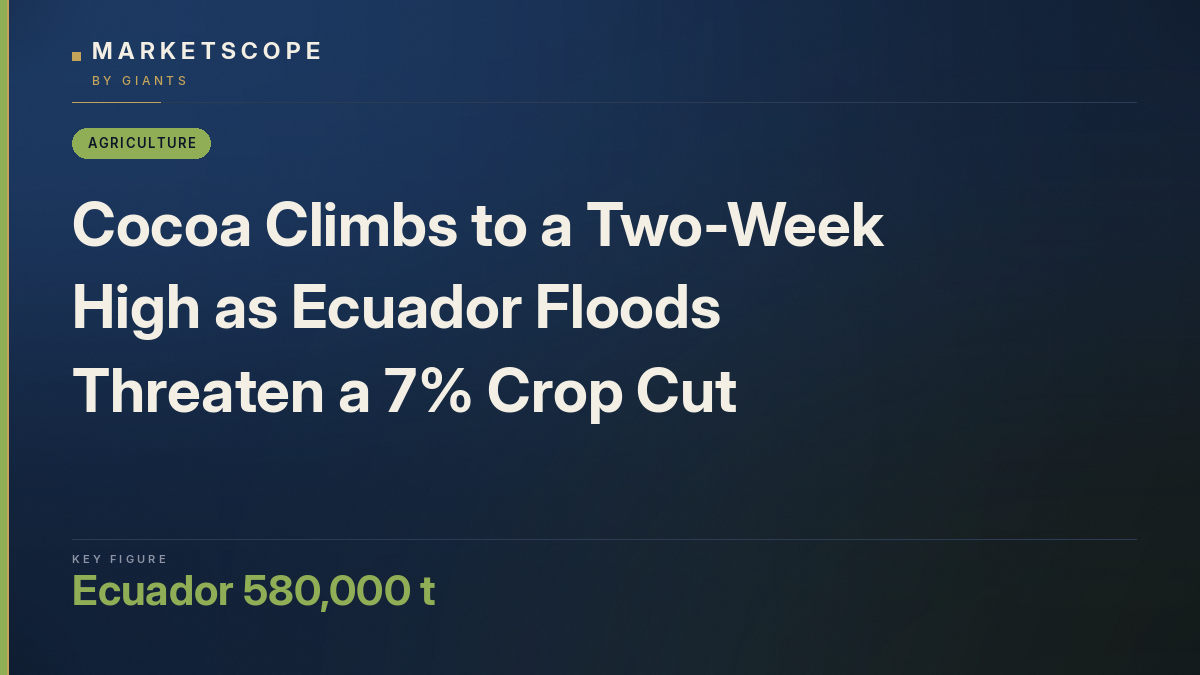
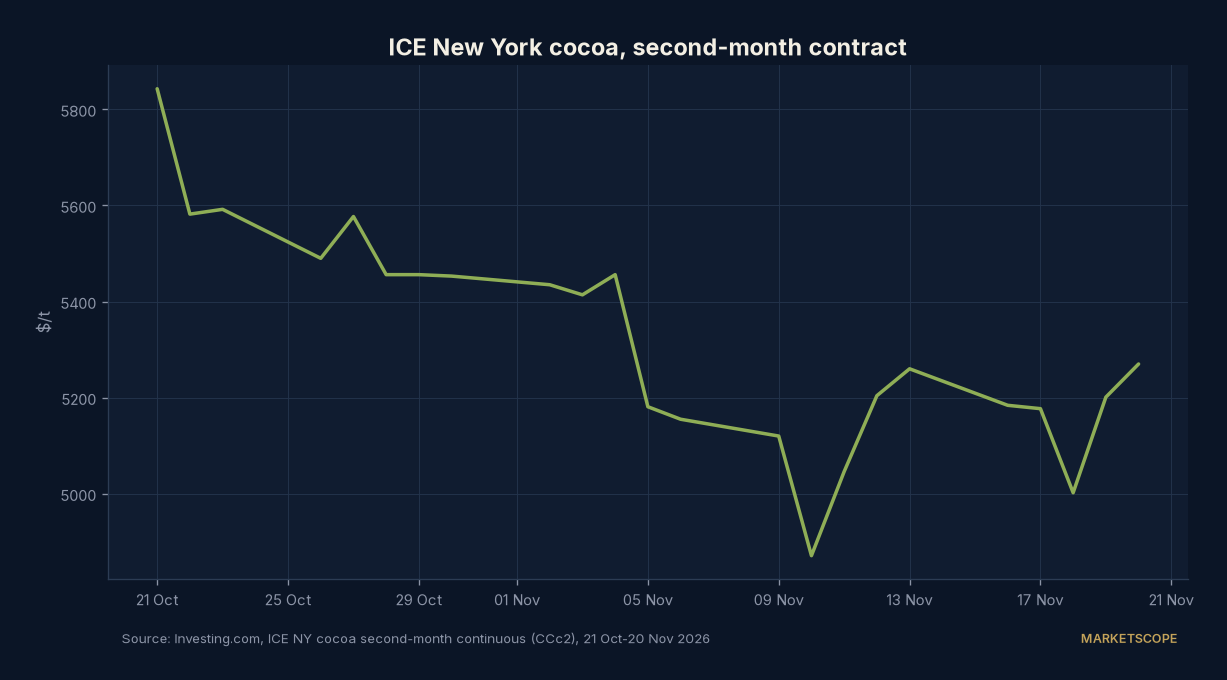
Cocoa prices rose for a second straight session on Friday to two-week highs, as reports of severe flooding in Ecuador added to supply concerns already raised by slow West African deliveries. December ICE New York cocoa closed up 62 dollars, or 1.22%, and ICE London cocoa #7 rose 1.50%, Barchart reported. Ecuador’s cocoa output is likely to fall to 580,000 tonnes this season, about 7% below earlier estimates, according to four traders and analysts interviewed by Bloomberg.
Ecuador’s buffer is under water
Rainfall along Ecuador’s coast, where most of its cocoa is grown, was more than 10,000% above historical norms in October, according to Vaisala Xweather. The El Niño-linked rains have caused floods, destroyed rural roads, damaged bean quality and spread disease to trees. Carlos Sánchez, president of the exporters’ association Anecacao, said the damage to roads “hinders or significantly delays access to the farms for harvesting, as well as the timely transport of the beans to collection centers.”
The damage could last beyond this crop, because excess rain can destroy flowers before they develop into pods. “El Niño continues to worry me because we won’t really have answers to all this until the end of the first quarter when the damage is done,” said Vladimir Zientek, senior commodities broker at StoneX. Ecuador has become a critical buffer for global supply, and Bloomberg noted that it is set to become more important as the EU’s deforestation rules make sourcing from West Africa riskier.
West Africa deliveries still lag
Ivorian farmers delivered 48,620 tonnes of cocoa to ports in the week to 15 November, against 104,808 tonnes a year earlier, according to Bloomberg data cited by Barchart. Season-to-date arrivals from 1 October are down 46% at 277,095 tonnes. Early assessments put the Ivory Coast crop at about 1.8 million tonnes, down 18% from about 2.2 million tonnes in 2025/26, and Ghana’s Cocoa Board estimates its 2026/27 crop at 650,000 tonnes. StoneX expects a 64,000-tonne global deficit in 2026/27.
Several factors are limiting the rally. ICE cocoa inventories rose to a 2.5-year high of 3,849,600 bags on Friday. The S&P GSCI plans to cut cocoa’s weighting for 2027 by more than half to 0.5%, and the Bloomberg Commodity Index is also reducing its cocoa holdings, prompting investors to sell ahead of the rebalancing. Nigeria’s September cocoa-bean exports rose 33% year on year to 19,343 tonnes. Open interest in New York remains below historical averages, and Hedgepoint’s Carolina França said fresh evidence of crop damage could prompt rapid buying and renewed volatility.
- Weekly Ivory Coast port arrivals and the progress of the main crop.
- Rainfall in Ecuador’s coastal growing areas and reports on flowering.
- Index rebalancing flows in early 2027.
- EUDR application from 30 December 2026, which affects sourcing decisions.
Impact Analysis
For chocolate makers and grinders, the market is pulled in two directions. ICE stocks are at a 2.5-year high and index funds are reducing exposure, which keeps a lid on futures. But physical supply from the three main origins is under pressure at the same time: Ivory Coast arrivals are down 46%, Ghana expects a smaller crop and Ecuador’s harvest and logistics are disrupted. Buyers relying on Ecuadorian beans to diversify away from West Africa should check delivery schedules and quality specifications, as flood damage and road closures can delay shipments and change bean quality.
For exporters and traders, quality differentials and origin premiums may move more than the futures price. With the EU deforestation regulation applying from 30 December, compliant Ecuadorian supply could become scarcer just when European buyers want it most. Producers in Nigeria are benefiting from higher prices, as the rise in September exports shows, but the medium-term risk from El Niño across West Africa remains.
Key figures
- ICE NY December cocoa: up $62 or 1.22% on Friday (Barchart)
- Ecuador 2026/27 output estimate: 580,000 t, about 7% below earlier estimates (Bloomberg)
- Ecuador coastal rainfall in October: more than 10,000% above norms (Vaisala Xweather)
- Ivory Coast arrivals 1 Oct to 15 Nov: 277,095 t, down 46%
- ICE cocoa stocks: 3,849,600 bags, a 2.5-year high
- StoneX 2026/27 global balance: 64,000 t deficit
Leave a Reply